
Introduction
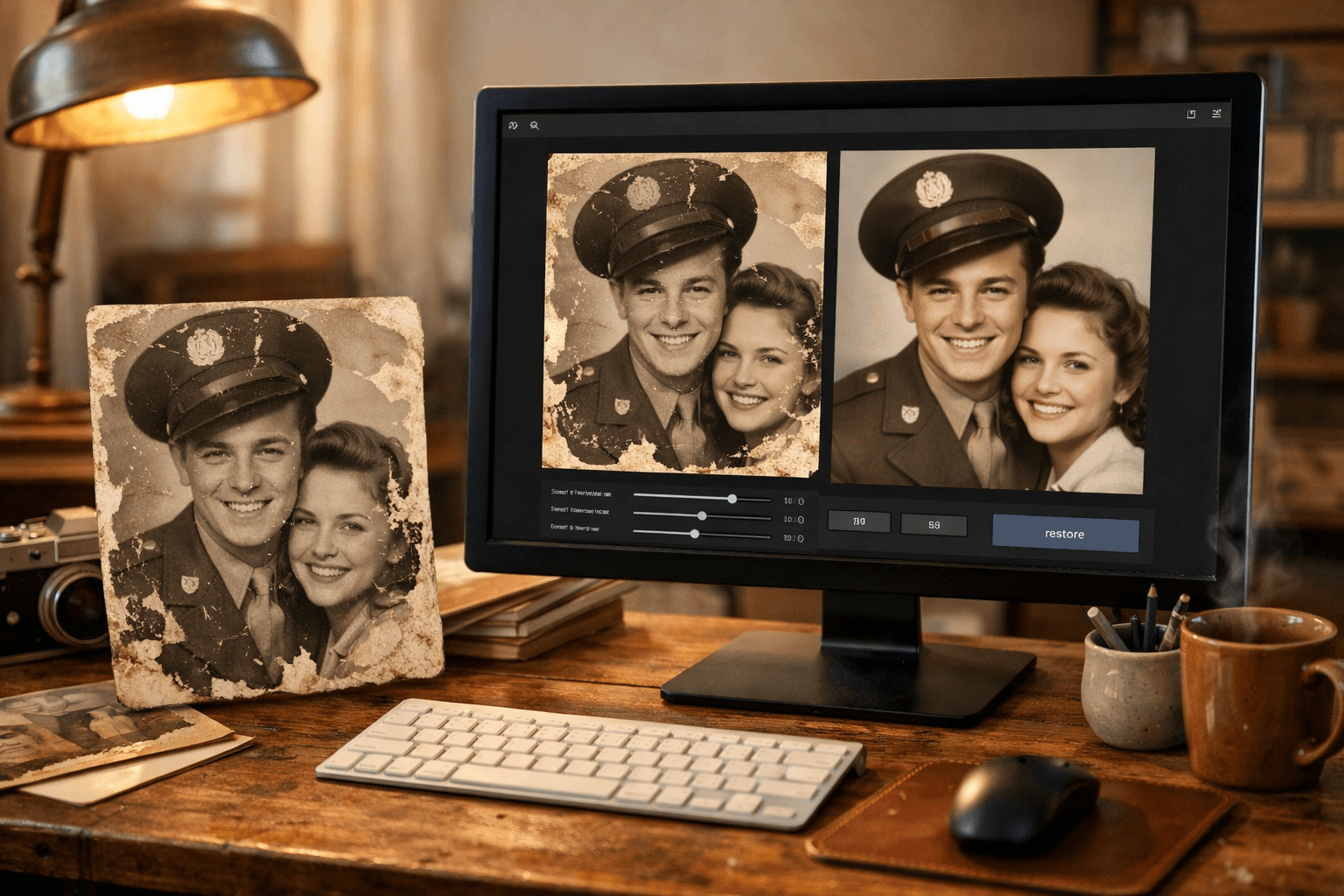
Restoring old photographs can bring precious memories back to life. There are two main ways to do this: manual restoration and AI-powered restoration. Each approach has its own strengths and limitations. In this article, we'll dive into the differences to help you decide which method is right for your photos.
What is Manual Restoration?
Manual restoration involves a photo editing expert using software like Photoshop to fix image damage. This process may include repairing scratches, stains, tears, adjusting colors, and enhancing resolution—all done meticulously, pixel by pixel.
Advantages of Manual Restoration
- Complete control: The restorer decides how to handle every detail, resulting in a highly personalized and precise restoration.
- Artistic correction: Allows adjustments based on the desired aesthetic or historical intention.
- Perfect for complex cases: Ideal for severely damaged photos or those with significant historical value where accuracy is crucial.
Limitations of Manual Restoration
- Time and cost: It can be a lengthy and expensive process, especially for large photo collections.
- Requires expertise: Not accessible to everyone, as it demands technical and artistic skills.
What is AI Restoration?
AI restoration uses advanced algorithms to automatically analyze and enhance images. These tools can repair scratches, remove dust, increase resolution, colorize black-and-white photos, and eliminate unwanted objects with just a few clicks.
Advantages of AI Restoration
- Speed: The process is almost instant and very user-friendly, perfect for those without technical knowledge.
- Accessibility: No editing skills needed, and usually more affordable than hiring a professional restorer.
- Consistent results: AI applies sophisticated techniques to improve visual quality, delivering good outcomes in most cases.
- Integrated workflow: Some apps let you purchase credits and complete all steps within the website, making the experience seamless.
Limitations of AI Restoration
- Less customization: AI follows preset rules and might miss specific details or artistic nuances.
- Occasional errors: In heavily damaged photos, AI may misinterpret elements, though it often allows you to review and compare changes.
Which Method Should You Choose?
The choice between manual and AI restoration depends on several factors:
- Volume and urgency: AI is ideal for large batches or quick restorations.
- Damage complexity: Severe damage or historically important photos may benefit from manual restoration.
- Budget: Manual restoration tends to be more expensive.
- Technical skills: AI is designed for users without editing experience.
Additionally, some modern solutions combine the best of both worlds by offering an initial AI restoration followed by optional manual touch-ups.
Conclusion
AI restoration has transformed how we revive old photos, making it accessible and fast for most people. Still, manual restoration remains the preferred choice when maximum precision and artistic care are needed. Assess your needs and your photos' condition to pick the best option and preserve your memories with the quality they deserve.
